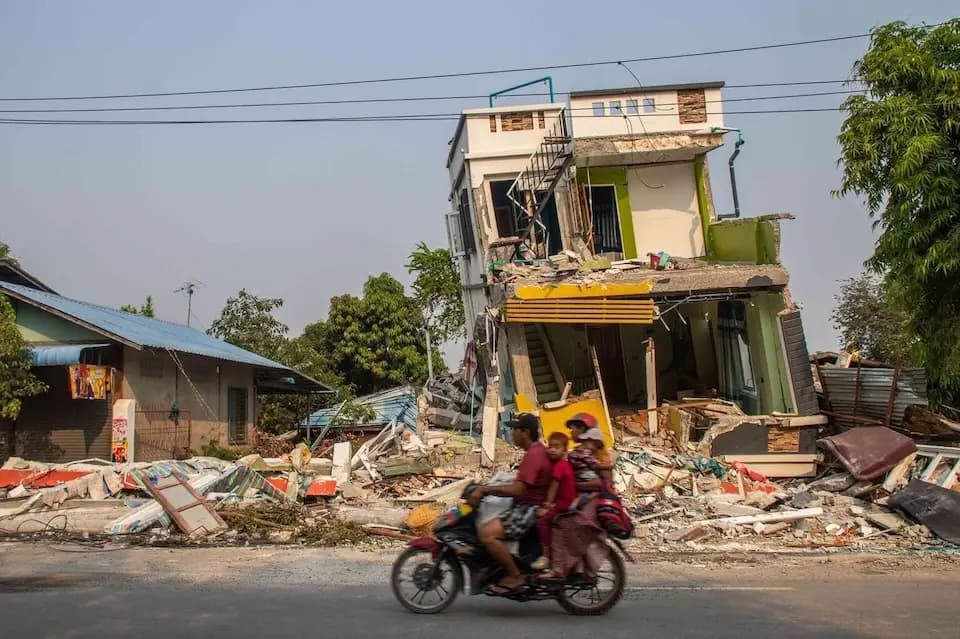
Yangon, Myanmar · March 28, 2025
2025 Myanmar Earthquake Response
Myanmar was already four years into a civil war when the 7.7-magnitude earthquake struck at 1pm on March 28, 2025. Access was restricted. Infrastructure was fragile. The information environment was under strain. Into that context, a major natural disaster landed — and within hours, UNICEF Myanmar became the first UN agency in Myanmar to break the news on social media.
I was sitting in a restaurant near the office when it hit. The ceiling lamps were swinging left and right. I felt unable to move — like being inside a toy house while a child shakes it. By the time the shaking stopped, I was already working.
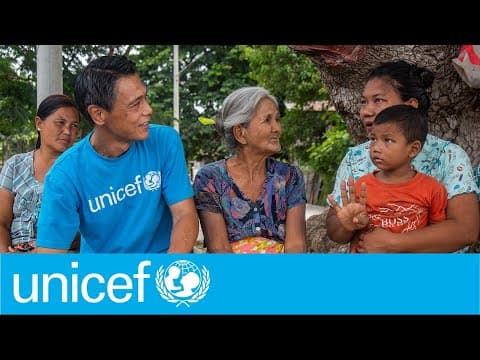
Watch the response
Acute Response
Weeks before · The signal
I had been tracking conversations on social media and monitoring seismic activity. Small tremors had been occurring. Something felt different. I published a parenting safety article on earthquake preparedness for children and families on the UNICEF Myanmar website — and boosted it on Facebook. I didn't know what was coming. But the article was ready.
Day 0 · 1pm — the ground moves
When the shaking stopped, I walked outside and immediately reshared the preparedness article on Facebook. The post reached 710,432 people — generating 28,000 reactions, 1,200 shares, and driving more than 5,000 visits to the UNICEF Myanmar website. The audience was there. And they were listening.
Day 0 · 3pm — the scale becomes clear
The first reports from Mandalay and Sagaing came through. Total destruction. All contact with colleagues based there was lost. The airport was closed. The highway was badly damaged. We had no photographers anywhere near the affected areas and no way to get them there quickly. It was a Friday afternoon and we were working in the dark.
Day 0 · Evening — relationships over infrastructure
Most of Mandalay was dark. Only buildings with solar power and fibre-cable connections had any internet. This is where years of investment in people mattered more than any tool or process. I reached out to colleagues and contacts on the ground — people I had worked with, trained, and built trust with over years. Some were still in the rubble. A few had survived and could send footage. Within 24 hours of the earthquake, that footage was in our hands — because those relationships existed.
That evening, I drafted and published UNICEF Myanmar's first statement on X — reaching nearly 32,000 impressions and retweeted 109 times. We were tracking what other agencies were posting in real time. We were first.
Day 1 · Filming under pressure
By luck, our Mandalay Chief of Field Office, Sai Han Lynn Aung, had been in Yangon for a meeting. We worked on a script overnight and filmed him the next morning. His phone didn't stop ringing — his team needed him, and his family back home in Mandalay was still unreachable. It took two hours to film what should have taken 30 minutes. He was visibly shaken. We helped him breathe through it.
Under 48 hours · Going global
The field video was published within 48 hours — the first from any UN agency in Myanmar. Within hours, UNICEF's global account amplified it — placing Myanmar children in front of global audiences, supporting donor communications, and ensuring the scale of the crisis was understood far beyond Southeast Asia.
Sustained Response
Weeks later · Mandalay Diary
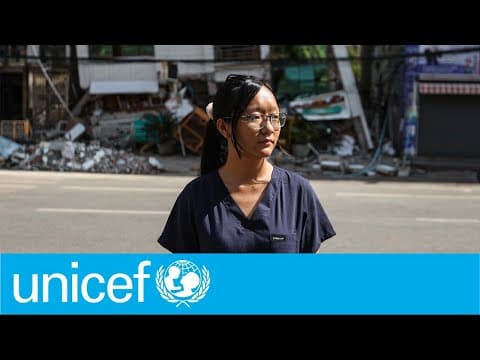
I wanted to go beyond the institutional response — to let the people who lived through it speak. I interviewed U-Reporters in Mandalay and turned their testimonies into a story series. One stood out: a medical student in her early twenties, volunteering at a local hospital to help with blood drives. She had lost a classmate in the earthquake. Her story — of grief, of showing up anyway, of what it means to be young in the middle of a disaster — travelled far beyond Myanmar. The video we produced with her was amplified on the UNICEF USA platform, where it reached over 14,000 views.
Ongoing · One month. Six months. One year.
The hardest part of humanitarian communications isn't the first 72 hours — it's the months after, when the world moves on. We didn't let that happen. I led the one-month and six-month earthquake response campaigns, producing stories and videos to sustain attention, document recovery, and keep donor support alive. A year on, the work continues — stories of recovery and resilience from the communities most affected, and a thank-you video for the UNICEF National Committees whose funding made the response possible.
Through sustained communications and consistent donor engagement, I contributed to the resource mobilisation that helped fund the response. According to UNICEF Myanmar's 2025 situation report, the response reached 4 million people — including 3.2 million children — despite less than a quarter of UNICEF's US$346.8 million appeal being secured.
The world has a short memory.
Our job is to make sure it doesn't forget Myanmar's children.